

Chicken: A Buying Guide
We spent an unhinged amount of time vetting poultry so that you don't have to


When I was growing up, supermarket poultry cases were all filled with the same yellow Styrofoam trays, shrink-wrapped and labeled with the part of the chicken you were buying, the price, and a “sell by” date.
Now, there are dozens of poultry brands competing for space in the case. The good news is this gives you, the shopper, more choice. New, premium brands have emerged in response to concerns about intensive poultry farming and a growing willingness to pay more for chicken raised in a way that’s better for the chicken, the planet, and you.
The bad news? This gives you, the shopper, more choice. And all that choice can be overwhelming, especially given the volume of misleading marketing claims in this category. Today’s poultry packaging uses every opportunity to hook you, from those evocative illustrations of storybook barns to call-outs like antibiotic-free, vegetarian-fed, and pasture-raised. Some of these claims are legit. Others … not so much.
We dug deep (very deep!) into the major players, talked to experts, and conducted multiple taste tests to find the absolute best chicken for you.

The Hunt
The average American gobbled up over 100 pounds of chicken in 2024, more than any other type of meat by a wide margin. I know it’s in my grocery cart every week, and probably yours, too. Because we eat so much chicken and because there are particularly significant animal-welfare concerns with the cheapest chicken, we see this as one of the more important items to buy thoughtfully.
We set out to find not just the best-tasting chicken, but — crucially — those that scored highest in terms of animal welfare, environmental impact, and nutrition. There’s a lot to unpack here, so let’s go category by category:
Animal Welfare: The single biggest thing you’re buying when you pay more for chicken is a better life and death for the birds. It’s important to know that the minimum standards for poultry welfare are extremely permissive; federal animal-welfare laws do not apply to poultry, and most of the 9 billion broilers produced each year in the United States are raised in ways that would likely be troubling to the average consumer. If it fits your budget, we strongly recommend that you seek out high-welfare chicken to help eliminate animal cruelty.
How do you know if it’s humanely raised? Your best bet is to look for independent certifications like USDA Organic, Certified Humane, Animal Welfare Approved, and Global Animal Partnership (GAP), which not only review producers’ paperwork, but send inspectors onto farms to see for themselves.
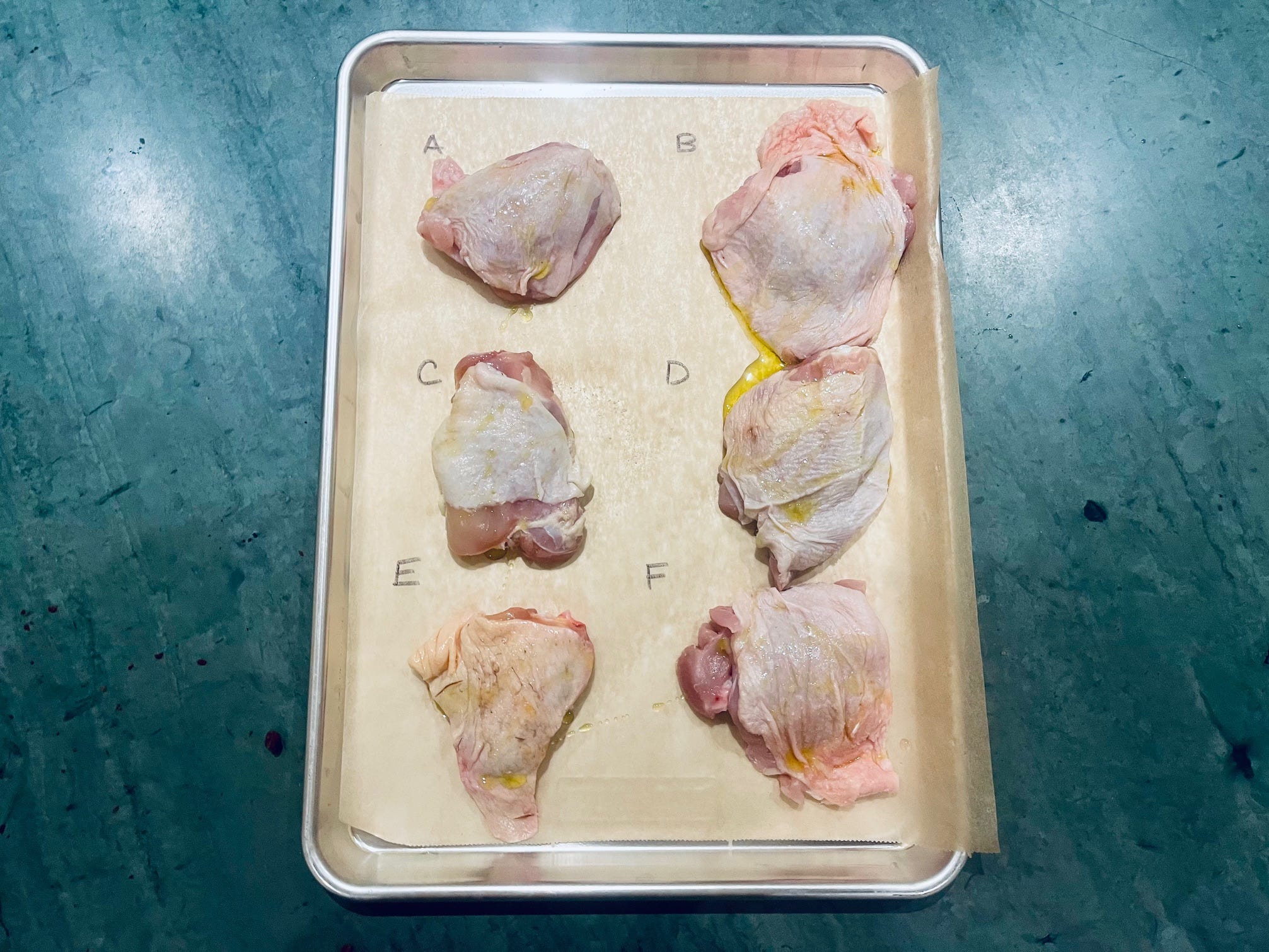
Taste: We conducted taste tests of breasts and thighs for all the brands that met our animal-welfare criteria, plus one “control” brand: conventionally raised Tyson products. For breast meat, we noticed a significant difference between the Tyson sample and the challengers: the Tyson breast was dry, woody, and lacking in flavor by comparison. Among the brands in the premium category, the differences in flavor and texture were minimal. We were surprised to find that for chicken thighs, there was little difference among the brands — regardless of price.
Environment: As meat goes, chicken isn’t very carbon intensive; pound for pound, poultry produces around 10 percent of the greenhouse-gas emissions of beef, and actually less than cheese or farmed shrimp. And there isn’t a great deal of difference between chickens raised in various ways when it comes to greenhouse-gas emissions. When we talk about environmental impact with chickens, what we’re mostly talking about is the impact on the local air and water of waste products from intensive poultry farming. It’s ideal to buy from producers that raise smaller flocks, and do so in areas not densely populated with chicken farms, something we took into account in our evaluation of various brands.
Public Health: An important claim to look for when buying poultry is “no antibiotics, ever.” This tells you, just like it sounds, that the birds have never been administered antibiotics of any kind. While there is little risk of chicken being contaminated by antibiotics when you eat it — incidences of antibiotic residue in chicken are very low in the United States — the widespread use of antibiotics in agriculture is the major factor driving the rise in antibiotic resistance, which is very bad for public health. Many poultry brands are currently backsliding on commitments to eliminate antibiotics use; we looked for ones that are still committed to no antibiotics, ever.
Nutrition: Believe it or not, there’s not much information out there about the relative nutritional merits of chickens raised in different ways or by different brands; the nutrition facts on the back of the package are typically just standard USDA data. But there is some evidence that birds raised on pasture are higher in omega-3 fatty acids and certain vitamins and micro-nutrients, and lower in saturated fat, than ones raised indoors. That’s one reason we recommend buying pasture-raised birds when possible.
There’s also one area where organic chicken has an edge: glyphosate residue. Chickens are fed corn, soy, and wheat-based feed, and if that feed is not organic, it likely was grown using the herbicide glyphosate. (Even pasture-raised chickens get most of their nutrition from grain-based feed, with a small proportion of their calories coming from what they forage.) Studies have shown that glyphosate residue can be found in the organs and muscles of chickens that consume corn treated with herbicide; while the levels seem to be quite low, if this is an area of concern for you, buying organic will guarantee the chicken was fed a glyphosate-free diet.
Price & Convenience: In a perfect world, we’d recommend buying chicken that lived 100% of its life on pasture, ate organic feed, and carried one or more stringent animal-welfare certifications. But there are no widely available grocery brands that meet all these criteria. Brands that do can easily cost upwards of $10 per pound, and might require online ordering, with all the attendant inconvenience and packaging waste. (Reader, I ordered chicken online from one particularly sterling poultry farm. Porch pirates stole my first delivery; when I finally received the second one, it was packaged in enough styrofoam to fill a 13-gallon trash bag.) Given how much chicken we all eat — my family can easily go through 10 pounds a week — we’re conscious this isn’t practical for the vast majority of people.

Our Picks
BEST OVERALL:
