

Fish: A Buying Guide
We untangled the most confusing food category in the supermarket so you don't have to

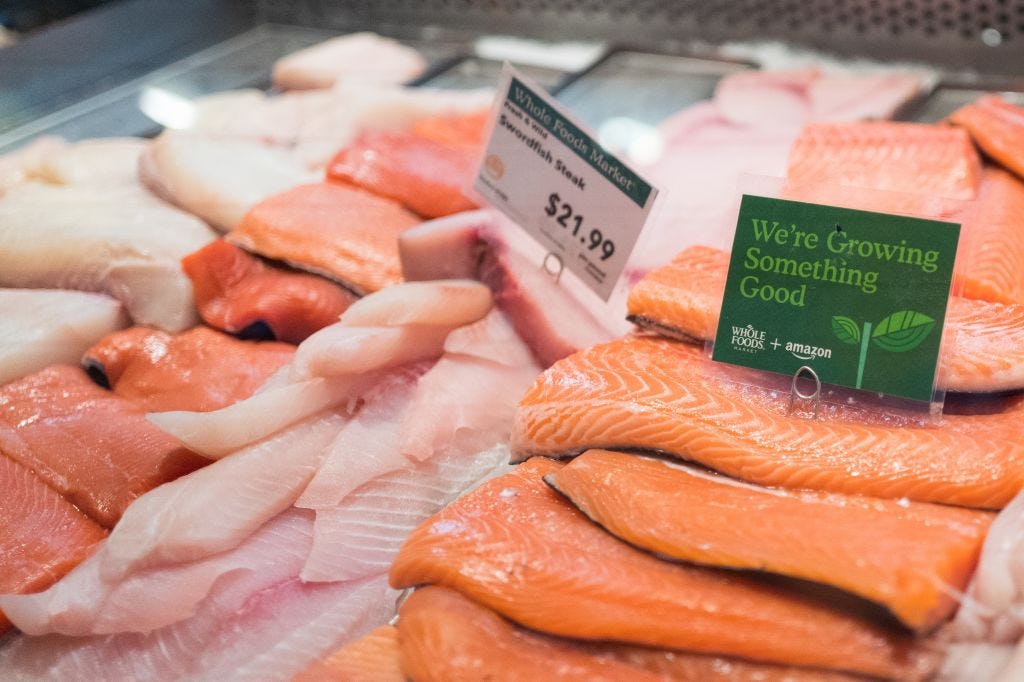
Inside the seafood counter at my neighborhood grocery store, there are farm-raised salmon fillets from Chile, wild-caught sockeye from Alaska, shrimp from Thailand, Indonesia, India, and the Gulf of Mexico, tilapia of indeterminate origin, and something called ‘previously frozen’ cod that raises more questions than it answers. A laminated sign invites shoppers to ‘ask our seafood expert for recommendations,’ but the surly dude in AirPods restocking the ice doesn’t look like he wants to be consulted. It’s enough to make you head straight for the meat case.
And apparently, that’s exactly what most Americans do. The average American eats only about 20 pounds of seafood per year—compared to about 120 pounds of chicken, 80 pounds of beef, and 60 pounds of pork. That’s a shame, because fish is one of the healthiest foods you can eat. It’s lean, packed with protein and nutrients like vitamin D, B vitamins, selenium, and—in the case of fatty fish like salmon, mackerel, sardines, herring, and anchovies—it’s an outstanding source of omega-3 fatty acids, particularly DHA, which is critical for brain and heart health. Despite concerns about overfishing, eating fish also tends to be more environmentally sustainable than eating meat from land animals.
So why don’t we eat more of it? A few reasons:
It’s expensive. Quality fish, in particular, can cost significantly more than chicken or even beef.
The supply chain is opaque. In most parts of the country (even coastal areas!) there are few “dock to dish” sources where you can buy fish directly from local fishermen. Although grocery store fish counters work hard to create the impression that the fish they sell is fresh off a fishing boat, the vast majority of seafood travels through long, circuitous supply chains involving multiple middlemen. By the time seafood reaches your grocery store counter, it may be quite old, with little traceability regarding where it came from or how it was caught.
Many people don’t love the taste. Per the above, this is often because the fish available at typical grocery stores isn’t very fresh. Old fish is fishy-smelling, mushy, and unappetizing. (Good fish should smell like the ocean—clean and briny—not like, well, fish.)
It’s confusing. The labels are bewildering—wild-caught, farm-raised, sustainable, organic, line-caught, previously frozen—and it’s hard to know what any of it actually means.
Here’s a somewhat controversial take: I believe the seafood industry has, in some ways, overpoliced itself. Organizations like Monterey Bay Aquarium Seafood Watch have done valuable work raising awareness about overfishing. But the result has been that consumers are overwhelmed by traffic-light rating systems and long lists of fish to avoid. The unintended consequence may be that confused consumers simply opt out of seafood entirely and eat more meat, which is generally worse for both the environment and their health.
This buying guide aims to cut through the confusion and make seafood shopping easier.

The Hunt
We dove deep (sorry, couldn’t resist) into the world of seafood sourcing, consulting NOAA data, Marine Stewardship Council guidelines, food safety reports from the FDA and EU, and our own years of interviews with fishmongers, chefs, and fishermen. Our goal: to give you a handful of simple rules that will help you make better choices without requiring a marine biology degree.
Rule #1: Prioritize U.S.-Caught Seafood
You’ll see lots of very specific guidelines about which fish species to eat, from which regions, caught by which methods. It can get dizzyingly detailed. But if you pay attention to just one thing, make it this: look for seafood caught in U.S. waters. “The U.S. in general is known for excellent fisheries management,” Laura McDearis, the U.S. program manager of the Marine Stewardship Council, told me, adding that 90% of US fisheries get MSC’s seal of approval. “It’s not perfect, but the message to consumers should be that generally, it’s really pretty good.”